

In modern football, the introduction of Video Assistant Referee (VAR) technology has placed match officials under unprecedented scrutiny. Yet Slovenian referee Rade Obrenovič has increasingly become a subject of debate over not only his on-field decisions but also his conduct and interactions with players and managers.
Having risen rapidly through the ranks to reach UEFA’s elite refereeing category, Obrenovič has attracted attention from domestic and international sports media following a series of controversial incidents. From disputed decisions in high-profile European fixtures to allegations of unprofessional behaviour, his performances have repeatedly fuelled debate over refereeing standards.
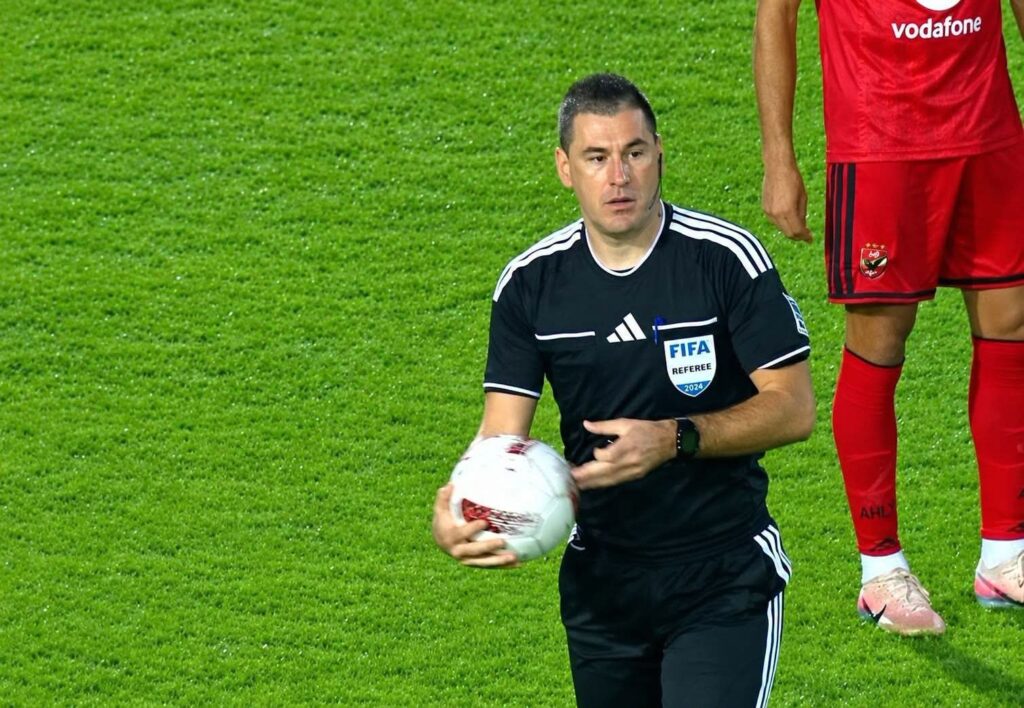
His latest appearance in Egyptian football, during the Cairo derby between Al Ahly and Zamalek, has brought renewed attention to his officiating record.
This report examines the major controversies and allegations surrounding the Slovenian official, from European competition to the Egyptian Premier League.
- Cairo Derby 2026: Penalty Controversy and Zamalek’s Protests
The Cairo derby between Al Ahly and Zamalek in October 2026 was not without controversy, as Obrenovič’s performance sparked anger among Zamalek supporters following their side’s 2-0 defeat.
The most contentious incidents centred on two penalty appeals involving Zamalek forward Chico Banza, who was alleged to have been fouled inside Al Ahly’s penalty area on separate occasions.
Critics argued that both incidents warranted spot-kicks, pointing to what they considered clear physical contact and obstruction. However, Obrenovič allowed play to continue on both occasions and did not consult the pitchside VAR monitor to review his decisions.
The incidents prompted criticism from sections of the Egyptian sports media, with some questioning whether the decisions had denied Zamalek opportunities to get back into the contest.
The disputed calls have reignited debate over the consistency of refereeing in major matches and added another chapter to the controversy surrounding the Slovenian official.

- Allegations of Political Favouritism and Questions Over His Rise
Beyond his decisions on the pitch, questions have also been raised about Obrenovič’s rapid progression to UEFA’s elite refereeing category and his appointments to high-profile European fixtures.
Critics have suggested that political considerations and connections within European football’s governing structure may have played a role in his continued advancement, despite criticism of some of his performances.
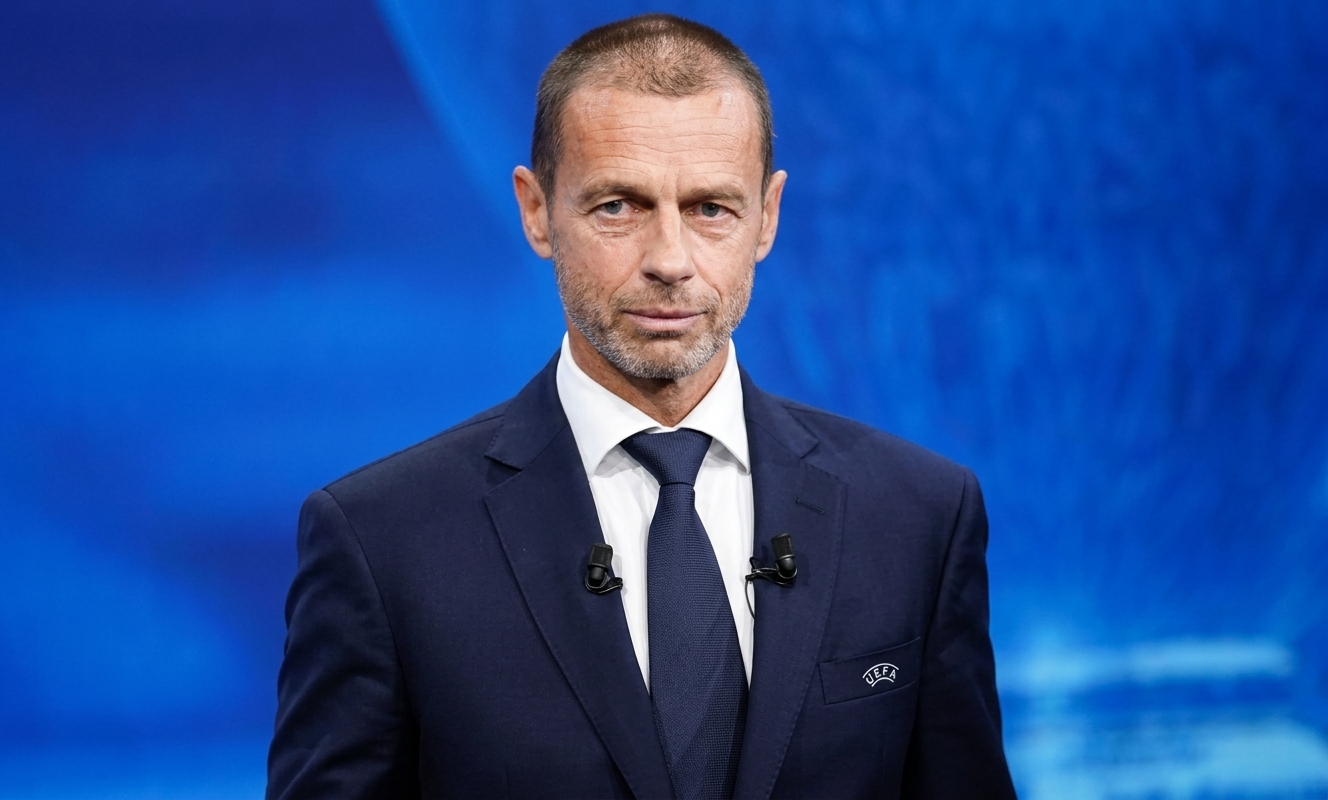
Obrenovič’s Slovenian nationality has also featured in speculation because UEFA president Aleksander Čeferin is from the same country. This has fuelled allegations of preferential treatment, with critics questioning whether merit alone explains the referee’s continued involvement in major European matches.
However, such claims remain allegations and should not be treated as evidence of improper influence without independently verified supporting information.

- Monaco’s Controversial Night: Complaint to UEFA and Questions Over Conduct
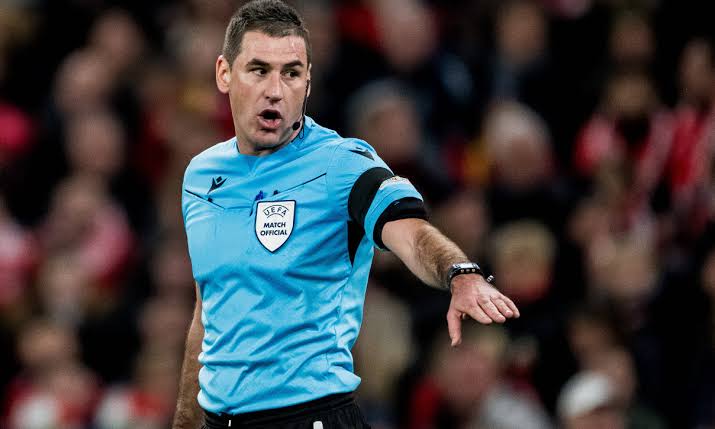
A particularly contentious episode reportedly occurred during Monaco’s Champions League meeting with Benfica in November 2024, when Obrenovič’s handling of the match came under intense scrutiny.
According to accounts cited in the original report, Monaco subsequently lodged a formal complaint with UEFA over a series of disputed decisions and incidents involving the Slovenian referee.
The controversy centred on several key issues.

Alleged inconsistency in disciplinary decisions
Obrenovič was criticised for not showing Benfica’s Álvaro Carreras a further yellow card, which would have resulted in his dismissal, despite challenges that Monaco considered worthy of punishment.
At the same time, Monaco defender Wilfried Singo was sent off after receiving a second yellow card, a decision that reportedly drew strong objections from the French club.
Gestures towards Monaco players
Television footage was also reported to have captured Obrenovič making a hand gesture described as a “talking hand” motion during exchanges with Monaco players.
The incident fuelled accusations that his manner towards the players was provocative and dismissive of their protests.
Alleged snub of manager Adi Hütter
Further controversy reportedly followed the final whistle, when Monaco manager Adi Hütter approached the officials to shake hands.
Obrenovič was accused of failing to acknowledge the Austrian coach or return his gesture, an incident that reportedly drew criticism in the French media and raised questions about professional conduct.
The episode added a behavioural dimension to the criticism of his performance, extending the debate beyond individual refereeing decisions.
- The Alleged Apology in Aston Villa vs Feyenoord
Another incident cited in discussions of Obrenovič’s career reportedly involved a Europa League match between Aston Villa and Feyenoord.
According to the account, the Slovenian referee incorrectly disallowed a significant goal for the Dutch side. During the half-time interval, he allegedly approached former Netherlands international Robin van Persie, who was Feyenoord’s manager at the time, and apologised for the decision.
The incident was subsequently discussed by Dutch football media, including FR12, and was presented as an example of the difficulties officials face when making decisive calls under pressure.
If confirmed, such an admission would underline the importance of accurate decision-making in high-stakes European competition. However, the precise circumstances of the alleged apology require verification against contemporary match reports.
The Palmieri Controversy and Aubameyang’s Criticism
Obrenovič has also reportedly faced criticism in French football, including an incident involving the dismissal of a player identified in the original account as Palmieri.
Pierre-Emerick Aubameyang, who played for Marseille at the time, was said to have criticised the referee’s decisions in strong terms, describing the officiating as a major controversy.
The alleged comments reportedly intensified criticism of Obrenovič in sections of the French media, with questions raised over the decisions that influenced the match.
However, the specific fixture, the identity of the player involved and the wording attributed to Aubameyang would need to be independently confirmed before the episode could be presented as an established fact.
The Numbers: A Referee Associated With High Card Counts
Disciplinary statistics can offer another perspective on a referee’s approach to managing matches.
Figures attributed in the original report to statistics platforms such as StatsHub suggest that Obrenovič averages more than four yellow cards per match, with the figure reportedly approaching six in UEFA Conference League fixtures.
If accurate, those numbers would indicate a relatively high frequency of cautions, although card totals alone cannot establish whether a referee is overly confrontational or inconsistent.
A proper assessment would require comparisons with other officials, taking into account the competitions involved, the intensity of the fixtures, the number of fouls committed and the circumstances surrounding individual bookings.
The broader question is whether a referee’s disciplinary approach helps maintain control of a match or contributes to unnecessary tension between officials, players and coaching staff.
Conclusion: A Refereeing Record Under Renewed Scrutiny
Rade Obrenovič’s latest appearance in the Cairo derby has brought renewed attention to the controversies and allegations associated with his officiating.
The disputed penalty appeals involving Zamalek, alongside reports of contentious decisions and alleged conduct issues in European competition, have fuelled debate over consistency, accountability and professional standards in refereeing.
Nevertheless, allegations of political favouritism, misconduct, and repeated serious errors must be assessed individually and supported by reliable evidence, not treated as established conclusions.
As scrutiny of match officials intensifies in the VAR era, the central issue remains the same: referees must make consistent decisions, communicate professionally, and apply the laws of the game fairly, particularly in matches where a single decision can decide the result.